


livid (adj) - furious or enraged; darkly discolored, bruised, or pale; ominously luminous [liv-id]
lividity is a state of fury or pallor (also lividness)
lividity can also describe the bluish-purple discoloration of skin after death (also livor mortis)
BREAKDOWN: The word livid derives from a classical root that basically only applies to itself, traced from the Middle French lividité and Medieval Latin līviditās to the Latin līvidus meaning black and blue. The original meaning focused on the color of bruising but somehow picked up connotations of both wrath and paleness over time.
“What a bore, someone who doesn’t deign to make an impression. Vain people are almost always annoying, but they make an effort, they take the trouble. On the other hand, we turn livid with fury in the presence of someone who pays no attention whatever to the effect he makes. What are we to say to him, and what are we to expect from him?” —Emil M. Cioran
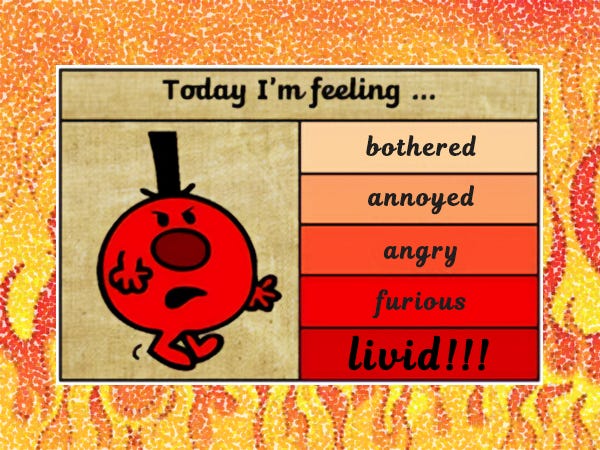
[Our Wednesday Wildcards are fascinating and important words that are not necessarily derived from classical roots.]
I learned the word "livid" when I first read the description of the day-in-the-life of our Australopithecine ancestors by the South African scientist Raymond Dart. Dart did very important work in the early days of human origins research, but his view of the behavior of Australopithecus africanus (discovered by Dart himself) was a little extreme:
“On this thesis man's predecessors differed from living apes in being confirmed killers: carnivorous creatures that seized living quarries by violence, battered them to death, tore apart their broken bodies, dismembered them limb from limb, slaking their ravenous thirst with the hot blood of victims and greedily devouring livid writhing flesh.”
The evidence he used to develop this characterization was deeply flawed, so don’t believe it. They mainly ate fruits, fungi, and roots, with the occasional bit of raw flesh when available.