


boycott (noun) - a voluntary, nonviolent refusal to buy, use, or deal with a product, business, person, or country to express disapproval or force change [boi-kot]
boycott as a verb means to refuse to buy, use, patronize, or participate in order to promote change
BREAKDOWN: We owe the eponym boycott to Capt. Charles C. Boycott, who was not the originator of the practice but instead one of its first public targets. Boycott was a landlord’s agent in 1880 with the job of collecting rents from tenant farmers on an estate in northwest Ireland at a time when these farmers were being exploited. Since the farmers could not get Boycott to lower rents, they protested through abstention instead of violence, refraining from doing business with him at all. Once newspapers in the United Kingdom and then overseas picked up the story, a new word had entered the vernacular.
“Colorful demonstrations and weekend marches are vital but alone are not powerful enough to stop wars. Wars will be stopped only when soldiers refuse to fight, when workers refuse to load weapons onto ships and aircraft, when people boycott the economic outposts of Empire that are strung across the globe.” —Arundhati Roy
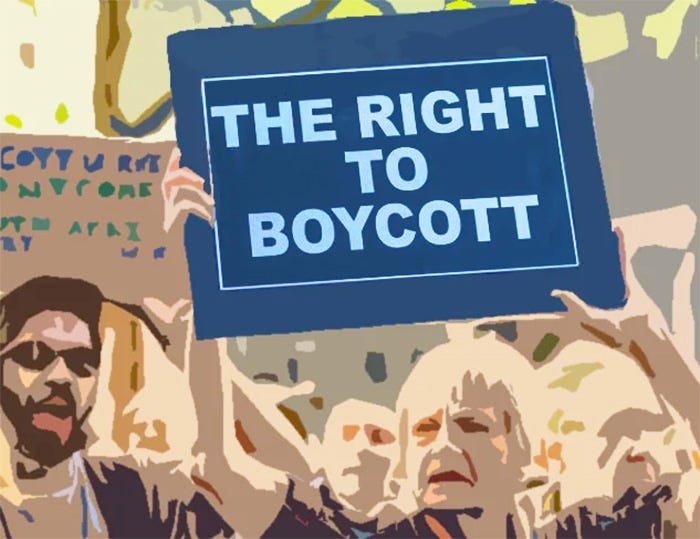
[Our Wednesday Wildcards are fascinating and important words that are not necessarily derived from classical roots.]